

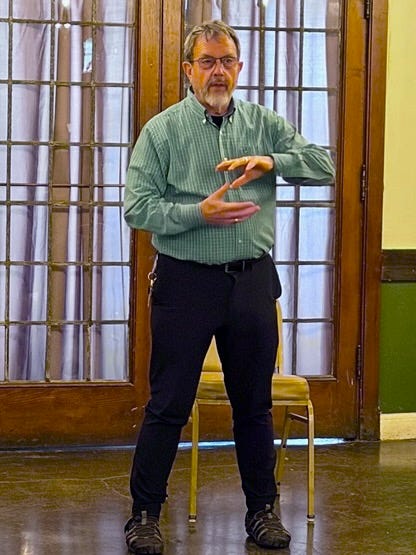
Welcome to these notes. I teach Qigong to my neighbors in Hyde Park, Chicago, and I write here about what that practice keeps showing me. It seems right to begin by explaining the name.
The old stories of Qigong are stories of the master’s door: years in China, the closed-door disciple, secrets passed only to family or an inner circle. Mine is a different story, and I suspect it is the story of most Qigong teachers to come. I am a village teacher who learned from books, screens, a few good teachers, and daily practice, and found it worth sharing with his neighbors. I came to Qigong not through the martial arts but as a senior with an aging body, and because of a car accident I do not remember.
The Routes I Did Not Take
As I read the history, Qigong reached the West along roughly five pathways, each through a master’s door. Anthony Korahais trained for seventeen years under Grandmaster Wong Kiew Kit. Bruce Frantzis became the disciple of Liu Hung Chieh in Beijing. Mimi Kuo-Deemer lived and taught in Beijing for over a decade. Roger Jahnke made trip after trip to China. Peter Wayne carried a lineage brought west by a Chinese émigré teacher into research at Harvard. Most of those doors opened through years of martial training, monastic discipline, or family obligation. That is not my route, and I suspect the door most future teachers walk through will look more like mine.
The Route I Did Take
The first door was a used book on Daoist breath practice that I found as a college freshman, a seed that lay dormant for decades. The second was my younger daughter, who discovered Traditional Chinese Medicine (TCM) while living in Guatemala and studies it still.
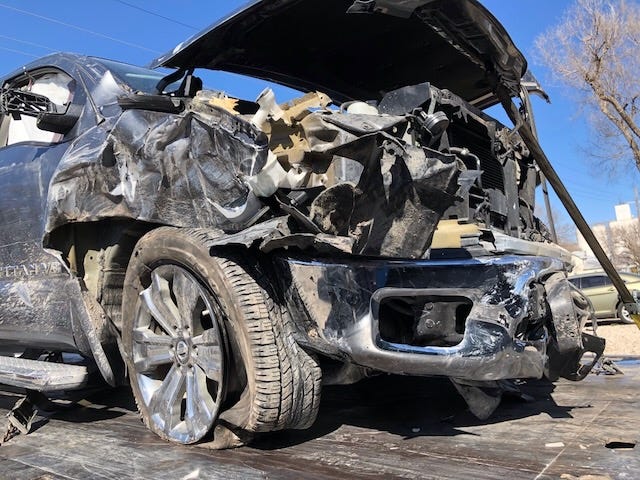
Then, on April 8, 2022, unaware of what I was doing, I drove a pickup truck into a stranger’s house. I have no memory of it. More than a year of cardiac, neurological, and sleep testing found no cause and offered little guidance on preventing it happening again. So I asked what another tradition might say, and whether I could become aware enough of my body to notice that something wasn’t right, and pull over.
I learned the word interoception: the body’s awareness of its own internal state. In September 2022 I joined Chris Cinnamon’s Tai Chi and Qigong classes in Chicago. Chris trained with Bruce Frantzis, so I learned in person from one link in a long master-to-student chain. Later, a TCM doctor and a psychotherapist, independently, read the event with the same word: dissociation. My daily practice deepened in January 2025 with Anthony Korahais’s Flowing Zen courses online. I have studied with Mimi Kuo-Deemer and attended Qigong research and National Qigong Association conferences in 2026. This fall Bryan Isacks became a second in-person link. He leads Yoga Farm Ithaca’s 200-hour, NQA-approved teacher training, which I am in now, and his own teachers include Zang Ke of the Beijing Physical Institute, Lu Laoshi of Hangzhou, and the American lineage holder Tom Bisio.
A Sixth Pathway
Perhaps this is a sixth pathway: a distributed apprenticeship. No single master holds my practice; many teachers have each placed a piece of it in my hands. The route has real costs. Without one teacher’s eye on me for years, I can miss corrections, collect forms faster than I deepen them, or mistake a polished video for a transmission. What helps is ordinary: daily practice, live correction whenever I can get it, naming my sources, and holding what I don’t know with honest curiosity, what researcher Peter Wayne calls “mindful not knowing.” It has strengths, too: a practice held in many bodies, across many communities, is harder to lose than one held by a single master.
Coming as a Senior
I came with arthritis, the ordinary losses of strength and balance, and one frightening unexplained event. Qigong does not fight the body. A good session builds more energy than it costs, so returning each day feels less like discipline and more like coming home. I cannot know whether greater interoception would have prevented the accident, and I hold that question open. What the practice has given me since is a felt sense of agency in my own health, more aliveness, and a pause before responding to life’s changes. It came as part of a larger package: TCM treatment, acupuncture, good doctors, rest, time, and the people around me.
What a Village Teacher Can Offer
In February 2025, after the chaos I experienced within our country that January, I began a free weekly Qigong session at University Church in Hyde Park. I am not a master. Yet people enjoy learning with me, find it useful in the rest of their week, and keep coming back. I think this is how Qigong has always lived in most places: a neighbor who has practiced a little longer, who shows up each week to share what they know. The village teacher does not hold the whole tradition. He holds enough of it, honestly, to help his neighbors move, breathe, settle, and find their own pause.
What Comes Next
In the posts ahead I’ll write about why this practice suits a community, what qi and Qigong mean, how the body becomes its own first teacher, and what the research shows and what it doesn’t yet explain. If any of that interests you, subscribe, and if you live nearby, come practice with us.
Practice with us
Free weekly class: Wednesdays, 10 AM, University Church, 5655 S. University Ave., Chicago.
Classes at Bodhi & Sage Wellness Community: 1525 E. 55th St., 3rd Floor, Chicago.
Schedule and registration:
https://www.bodhiandsage.com
Nothing in this post constitutes medical advice. It is offered for educational and wellness purposes only. Please consult a qualified healthcare provider before beginning any movement, breathing, or meditation practice.
Curated and directed by C. Havens · Researched and drafted by Claude (Anthropic), under Charlie’s direction.