


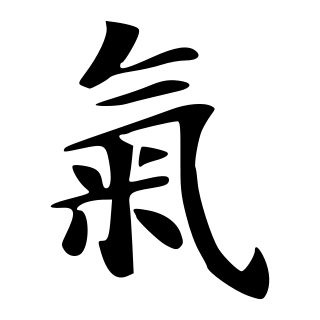
Last time, I wrote about our group's name. This time, a few words about words. Qigong's language carries a lot of history, and some of it can get in the way until we understand what it points to. The good news is that you don’t need to believe anything to begin. You only need to pay attention.
In reality, qi is not a mystical force separate from nature. Qigong is the practice of direct contact with nature, with contacting our own nature…
First, the Benefits
Research from Harvard, Stanford, and integrative-medicine centers worldwide shows that regular practice reduces stress hormones, improves the nervous system’s flexibility, improves balance, lowers the risk of falls, and supports immune function. These are established outcomes. What remains open is the full account of why, and that openness is part of what keeps the practice worth staying curious about.
What Is Qigong?
Put simply, Qigong cultivates qi through movement patterns and postures, breath, and intention. Some of it moves; some of it is standing or sitting still. All of it asks you to pay attention to what is happening inside you while you do it.
So What Is Qi?
Qi is a concept, and a useful one: a way of directing attention toward living processes as they happen, rather than toward static structures. A photograph shows what a river looks like, but not its current, its pull, or how it responds to what falls in. Qi points your attention toward the current.
When a Western doctor looks at your liver, they see an organ, a thing. When a practitioner of Chinese medicine speaks of liver qi, they mean what the liver does and how it works in relationship to everything else. It is a relational way of seeing, in which everything changes and everything is connected.
A Word About “Energy”
Outside physics, “energy” usually means “vital energy.” So when a teacher says “feel the energy in your hands,” it is not a claim about physics. It points toward vital aliveness: sensation, presence, the felt quality of being in your body. A useful translation is to read “vital energy” as an honest perception of what your body is actually doing.
Breath and Movement
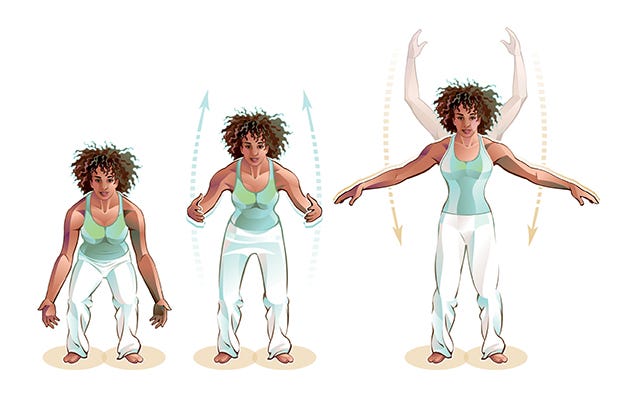
In Qigong, breath and movement are not two things you coordinate; they are one event. When the practice clicks, you won’t be breathing and moving. You’ll simply be moving, and the breath will be that movement’s expression. Don’t force it. It arrives on its own as your alignment improves.
A Word About Song
Song (鬆, pronounced “soong”) is usually translated as “relaxed,” but that misses something important. Song is not limpness or collapse. It is releasing unnecessary tension while keeping your structure: the body does exactly what the moment requires, and nothing extra. A tree in the wind is song. A heap of laundry is not.
One scientific way to see it: song may be the nervous system letting go of habitual bracing it no longer needs, learning to do less while sensing more accurately. That is a working lens for how Qigong might work, not a settled explanation.
You Don’t Need to Believe
A useful working definition of “spiritual” here is simply intellectual honesty: open-minded, not dogmatic, and willing to update what you believe based on what you actually experience. You can treat qi as a metaphor, a traditional map, or something you feel directly, and practice just as well either way. Every one of these words is a finger pointing at the moon. The most important thing you can do is pay careful attention to what is actually happening in your body. The practice is happening now.
Try it today
Before you start anything (practice, a meal, a difficult conversation), let your shoulders and jaw soften by half while you keep standing or sitting tall. That is a first taste of song.
Next time: the body as the first teacher, and why the most reliable instruction in Qigong comes from inside.
Practice with us
Free weekly class: Wednesdays, 10 AM, University Church, 5655 S. University Ave., Chicago.
Classes at Bodhi & Sage Wellness Community: 1525 E. 55th St., 3rd Floor, Chicago.
Schedule and registration:
https://www.bodhiandsage.com
This post does not constitute medical advice. It is offered for educational and wellness purposes only. Please consult a qualified healthcare provider before beginning any movement, breathing, or meditation practice.
Curated and directed by C. Havens · Researched and drafted by Claude (Anthropic), under Charlie’s direction.